
Uncategorized
Self-Driving Robotics in Education: From LEGO to Scrap Innovation
Mar
Education is rapidly evolving from theory-based learning to hands-on innovation. One of the most exciting areas driving this change is educational robotics, especially in building self-driving systems.
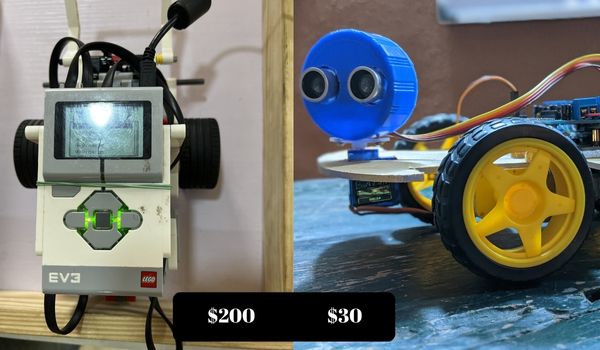
Using platforms like LEGO robotics kits, students can design and program autonomous cars that follow paths, detect obstacles, and make decisions. These kits simplify complex concepts like artificial intelligence and automation, making them easy to learn and apply in classrooms and innovation hubs.
However, the high cost of LEGO kits limits access for many students—particularly in developing regions. This is where scrap-based robotics becomes powerful.
With simple materials like discarded motors, plastic containers, and basic microcontrollers, students can build functional self-driving models such as line-following cars and obstacle-avoidance robots. These projects teach the same core principles—sensors, logic, and control systems—at a fraction of the cost.
More importantly, scrap-based builds encourage creativity, problem-solving, and resourcefulness, while promoting sustainability.
Rather than replacing LEGO, both approaches work best together:
- LEGO provides structured learning and ease of use
- Scrap-based builds drive innovation and real-world problem-solving
Combining both creates a powerful, inclusive model for STEM education—one that equips students not just to understand technology but to create it.
